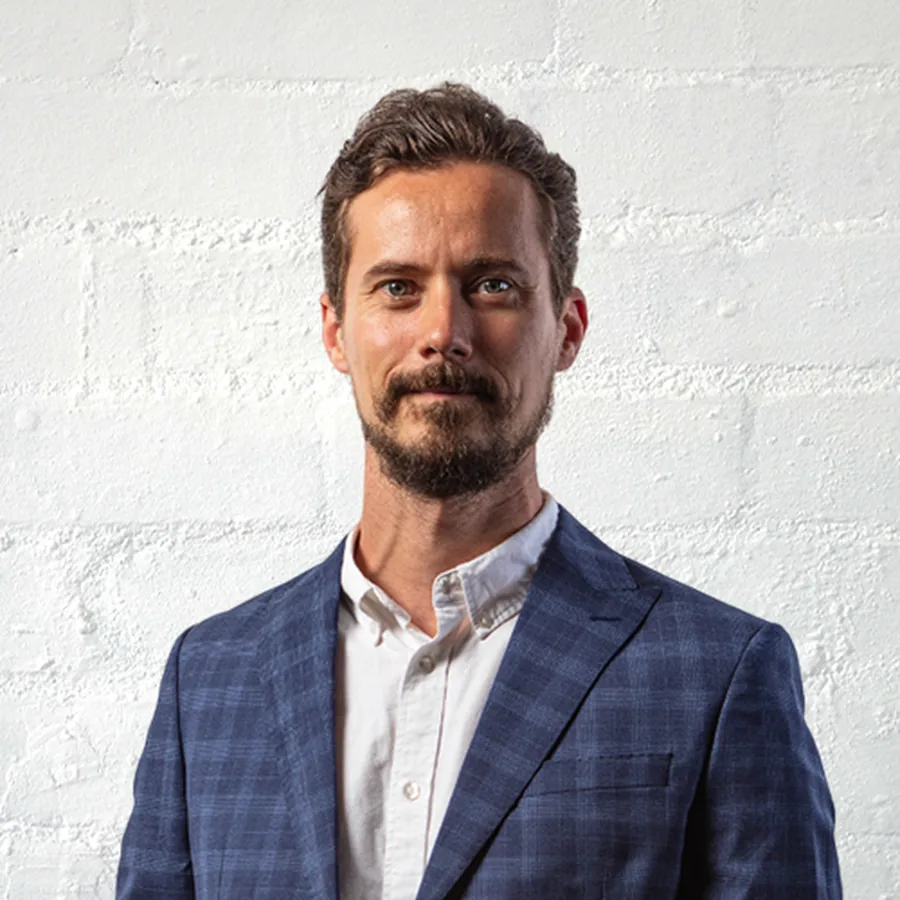
When Integral Media’s Managing Director Alex Morrison appeared on Channel 7’s The Morning Show in April 2026, the question the hosts put to him was one most Australians have been quietly asking themselves for a while: how exposed is my job to AI?
Watch the full segment on YouTube
The answer, it turns out, is more nuanced than the headlines suggest. And to help working Australians find a clear, data-driven answer for their specific occupation, Integral Media built a free tool: Future Work AU, available at jobs.integralmedia.com.au.
How the Tool Came About
The idea was sparked by similar work being done in the United States, where researchers had begun mapping AI exposure across American occupations. Morrison saw the gap in the Australian market and set out to build something locally relevant.
“We’ve been trying to help businesses and employees adapt to the change in the working environment,” he explained on the program. “We wanted to release this tool to help inform employees and give them the options they can use to upskill themselves, so they can take advantage of the change that’s coming.”
Future Work AU draws on data from Jobs and Skills Australia, the Australian Bureau of Statistics, SEEK job listings, and a consensus of four leading AI models: Claude, GPT, Gemini, and Grok. Each of the 358 occupations in the dataset receives a score from 1 to 10, reflecting how exposed that role is to AI automation or augmentation.
The tool covers 13.9 million Australian workers.
Australia’s Surprising Position
One of the more counterintuitive findings from the research is that Australia’s median AI exposure score sits at 3 out of 10, which is notably lower than comparable figures from the United States.
The reason is structural. Australia’s economy is heavily weighted toward trade, mining, and physical labour, sectors that are genuinely difficult to automate. That composition offers a degree of natural protection that countries with more office-heavy workforces do not have to the same extent.
It also means the dominant narrative, the idea that AI is on the verge of eliminating most jobs, does not hold up well against Australian data. In fact, of the 358 occupations analysed, 349 showed AI enhancing more tasks than it replaces.
Three Zones: Where Does Your Job Sit?
The Future Work AU framework organises occupations into three zones. Here is what the data shows for some of Australia’s largest workforce groups.
Zone 1: Low Exposure (Score 1 to 3) — The Protected Workforce
These roles depend on physical presence, emotional intelligence, or real-time human judgment in ways that current AI cannot replicate.
- Registered Nurses (346,400 Australians, Score 3): Healthcare demands empathy, physical care, and rapid clinical judgment. AI assists with administration and diagnostics, but the human role at the bedside remains irreplaceable.
- Aged and Disabled Carers (314,600 Australians, Score 1): The lowest-exposure occupation in the dataset. This is deeply personal work built on trust, and demand is growing steadily as Australia’s population ages.
- Truck Drivers (199,200 Australians, Score 3): Australia’s diverse road conditions, strict safety regulations, and the complexity of last-mile delivery all require human adaptability that autonomous systems are not yet equipped to match.
As Morrison summarised on the program: workers in roles with a high physical demand, including trades, healthcare, and transport, are in the most secure position.
Zone 2: Medium Exposure (Score 4 to 6) — The Augmentation Zone
In these roles, AI is already handling specific tasks, but the human element remains central to how the work gets done.
- Sales Assistants (556,500 Australians, Score 4): AI takes on inventory management and personalised recommendations while human staff focus on the service interactions that actually drive conversion.
- Retail Managers (243,700 Australians, Score 4): AI provides real-time analytics and demand forecasting. Strategic leadership, team culture, and supplier relationships remain firmly human.
- Receptionists (189,000 Australians, Score 6): Routine scheduling and standard queries are increasingly automated, but the warmth and judgment needed in face-to-face contact keeps the role relevant.
Morrison described these roles as being “augmented by AI,” meaning the technology is actively helping people do their jobs better rather than threatening to remove them.
Zone 3: High Exposure (Score 7 to 9) — The Red Zone
These occupations involve a high proportion of tasks that AI handles efficiently: processing information, generating text, reconciling data, and writing code.
- General Clerks (294,400 Australians, Score 8): Data entry, filing, and administrative coordination are increasingly handled by large language models. The transition path points toward specialist coordination and complex problem-solving roles.
- Accountants (203,600 Australians, Score 8): AI automates reconciliation, basic tax preparation, and report generation. The profession’s future lies in advisory services, complex tax strategy, and client relationship management.
- Software Programmers (175,700 Australians, Score 7): In an irony not lost on the industry, programmers are among those most disrupted by tools they helped create. The pivot points toward architecture, systems thinking, and translating business requirements into technical solutions.
“643,000 Australians work in the three most at-risk occupations,” Morrison noted. “These workers need AI literacy now, not later.”
The Opportunity, Not Just the Risk
One of the more memorable exchanges in the segment came when a host suggested workers should “adapt or die.” Morrison pushed back with a different framing.
“There’s a lot of doom and gloom out there, but we’re looking at the opportunity,” he said. “This is a tool that we think drives us forward and the opportunity that that creates.”
That perspective is backed by the data. The finding that 349 out of 358 occupations see AI enhancing more tasks than it eliminates is a fundamentally optimistic result. It suggests that for most Australian workers, the question is not whether AI will take their job but how quickly they can learn to use it as an advantage.
The hiring market is already shifting in that direction. Fourteen per cent of Australian job advertisements now mention AI, up from virtually zero two years ago.
What Workers Can Do Today
The practical advice Morrison offered on the program was straightforward.
Start by using free AI tools regularly. ChatGPT, Claude, and Microsoft Copilot all have free tiers and improve quickly with daily use. The best way to understand what AI can and cannot do is to use it on real tasks from your own working day.
From there, look at which parts of your role involve writing, research, data processing, scheduling, or customer communication. These are the areas where AI can take on the first draft or the repetitive work, freeing you to focus on the judgment, relationships, and complexity that the tools cannot handle.
For workers in the red zone specifically, there is a clear career strategy: become the person in your team who understands AI. That expertise creates job security in ways that simply performing the existing role well may not.
“There are a lot of free online resources to help people train up in how their roles will be changing,” Morrison said. “The more they can implement AI into their own roles over time, the more secure we feel those jobs will be moving forwards.”
Find Your Occupation
Future Work AU is free and open to everyone. Workers, students, business owners, and employers can search any of the 358 occupations and see exactly how the AI exposure score is calculated and what it means in practice.
Visit jobs.integralmedia.com.au to explore the full interactive map.
Integral Media works with businesses across Australia on digital strategy, including understanding and preparing for the practical impact of AI on their industry. For enquiries, visit integralmedia.com.au.