Your next opportunity might already be in your CRM.
It could be a prospect who requested a proposal but wasn’t ready to move ahead. A former client whose priorities have changed. Or someone you met at an event and intended to follow up with, but never quite did.
These contacts already know something about your business. That makes them a useful place to start when looking for new opportunities, but it doesn’t mean they’re ready for a sales pitch.
The key is to use your CRM to understand the relationship, then use LinkedIn to reconnect in a way that feels relevant and personal.
Here’s how to turn past conversations into a practical follow-up process.
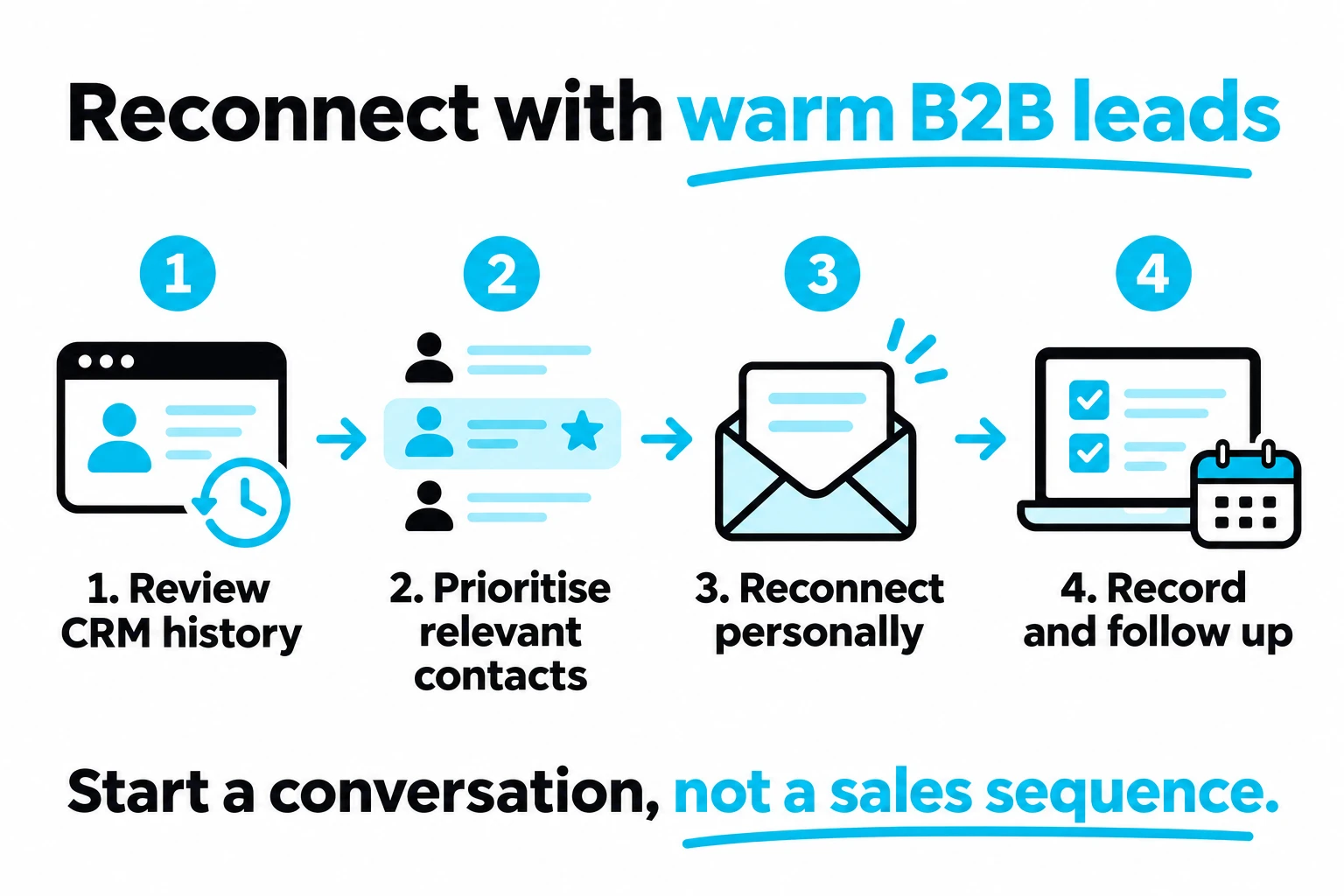
Start with the history in your CRM
Before contacting anyone, look at what you already know.
A CRM record can tell you how the relationship started, what the person was interested in and why the conversation stopped. It may also reveal that someone has already followed up, or that the contact asked not to hear from you again.
Review:
- The last meaningful conversation and when it happened
- The original enquiry, opportunity or project
- Any proposal, objection or reason for delay
- Who managed the relationship
- The contact’s communication preferences and any opt-outs
- Whether the contact and company details are still current
Look beyond the deal stage. A record marked “closed lost” might simply mean the timing wasn’t right. Equally, a contact listed as an open opportunity may no longer be relevant.
The aim is to understand the context before deciding whether there is a good reason to reconnect.
Choose the right contacts first
You don’t need to work through every name in your database. Start with a manageable group where there is both a genuine relationship and a reason a conversation could be useful.
For example:
- Past prospects: They explored a service but put the project on hold.
- Former clients: You delivered work for them and parted on good terms.
- Existing contacts: You’ve met or spoken before, but haven’t kept in touch.
- Referral partners: You know each other’s businesses and may be able to share useful introductions or insights.
Prioritise people based on fit, the strength of the relationship and what you know about their previous needs. A smaller list gives you more time to make each approach worthwhile.
Also check for changes. Someone may have moved roles, the business may have changed direction, or a colleague may now own the relationship. LinkedIn can help you check publicly available updates before you reach out.
Use LinkedIn to add context, not just a new channel
LinkedIn is useful because it can show you what has changed since your last conversation.
You might notice that a contact has moved into a new role, their company has launched a service, or they’ve shared a perspective on a challenge you previously discussed. Any of these can give you a natural starting point, provided the connection is relevant.
Spend a few minutes looking at their profile and recent activity. Then ask yourself:
What would make a conversation with us useful to this person now?
Sometimes the answer is a relevant observation or a useful resource. Sometimes it’s simply checking in. And sometimes there isn’t a good reason to reach out yet.
If you’re already connected, a short message can be enough. If you aren’t, consider whether you know the person well enough to send an invitation. LinkedIn recommends sending invitations to people you know and trust, and may restrict accounts when too many invitations are ignored or marked as spam.
Make the first message about the relationship
A good reconnection message reminds the person how you know each other and gives them an easy way to respond. It doesn’t need to include a pitch, a calendar link and a list of services.
For a past prospect, you might write:
Hi Sarah, I was looking back at our conversation about improving lead follow-up and thought I’d check in. How have things been going with that project?
For someone who has changed roles:
Hi James, I noticed you’ve moved into a new role at [company]. Congratulations. I enjoyed our conversation about [relevant topic] and wanted to say hello. How are you finding the new position?
The best message will depend on the relationship. Use your own voice, refer to something real and avoid pretending you know more about their situation than you do.
If there’s no response, don’t assume the contact needs a longer pitch. They may be busy, the timing may be wrong, or they may not be interested. A brief, relevant follow-up can be appropriate; repeated messages across multiple channels can quickly undo the goodwill you’re trying to rebuild.
Offer something useful when there’s a reason to
Once a conversation starts, focus on the person’s current priorities rather than the opportunity you hoped to create.
Ask what has changed since you last spoke. Listen to the answer. If you have a relevant article, observation or example, share it because it helps, not simply to create another touchpoint.
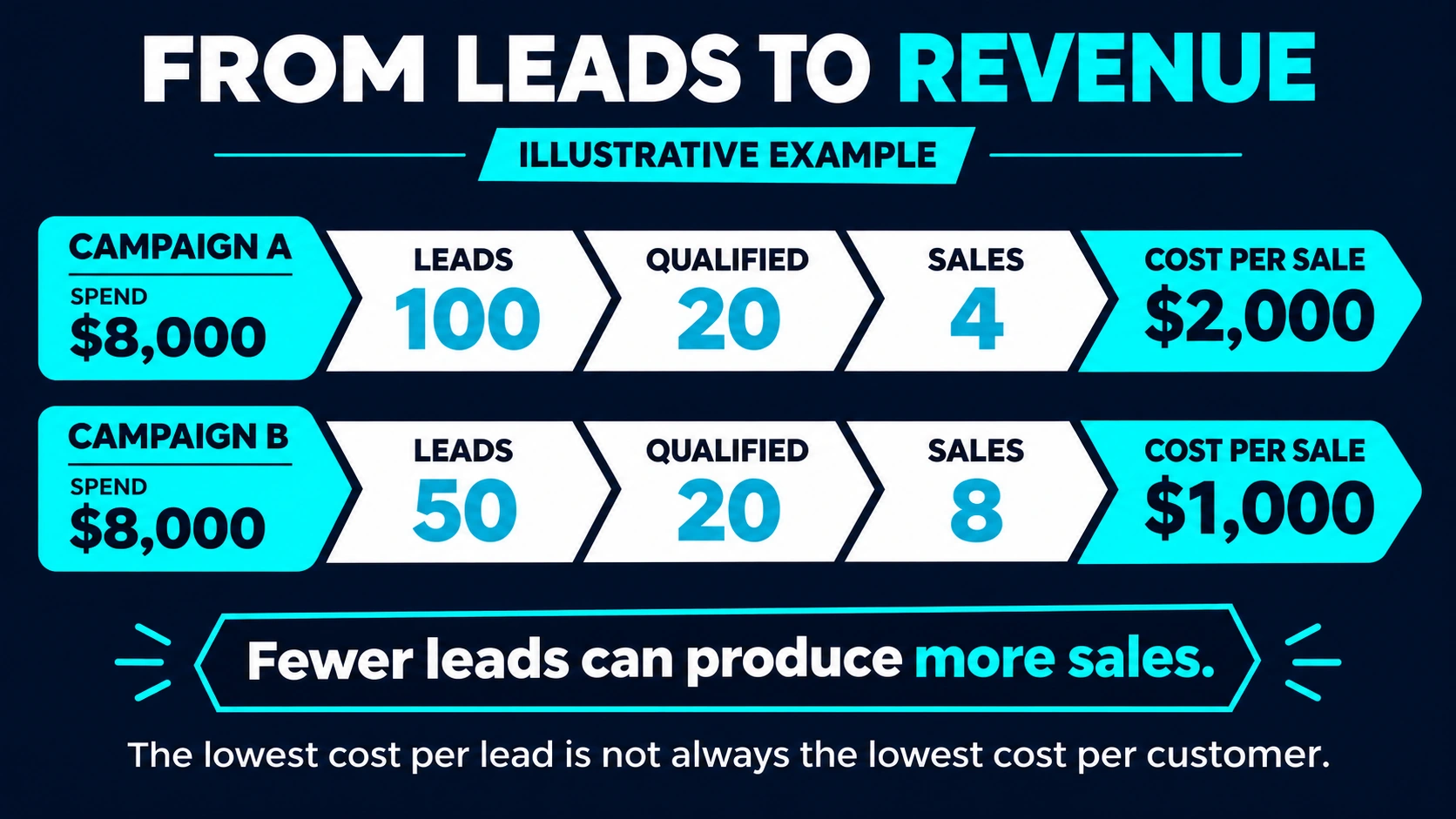
For example, if a prospect previously struggled to understand whether their marketing was generating valuable enquiries, a discussion about connecting lead data to sales outcomes may be useful. Our article on whether Google Ads leads are turning into revenue explores that question in more detail.
If there’s a clear fit and the person is interested, you can suggest a call. If there isn’t, a helpful conversation is still a positive outcome.
Keep the CRM up to date
The CRM becomes more useful when it reflects what actually happened, not just what someone hoped would happen.
After each interaction, record:
- The date and channel
- A brief, relevant summary of the conversation
- The contact’s current priorities or timing
- Any agreed next step and its owner
- Communication preferences or a request not to be contacted
Keep notes factual and proportionate. The next person looking at the record should understand the relationship without having to read a transcript of every exchange.
If someone asks you to follow up in three months, set a reminder. If they say the project is no longer relevant, update the record. And if they don’t want further contact, make sure the whole team can see and respect that preference.
Measure conversations and opportunities, not just activity
Sending more messages is easy to measure. It doesn’t necessarily mean your approach is working.
Instead, track a few measures that reflect progress:
- Relevant contacts reviewed: How many records were current and suitable for outreach?
- Conversations started: How many people replied or engaged meaningfully?
- Qualified opportunities: How many conversations revealed a realistic business need?
- Opportunities won: How many became customers or projects over time?
Review the results alongside the length of your sales cycle. A conversation that leads to a project months later may be more valuable than a quick response that goes nowhere.
It’s also worth noting why people aren’t ready. Repeated themes around timing, budget or changing priorities can help your team improve future follow-up and marketing.
Keep outreach respectful and compliant
A previous conversation or a CRM record is useful context, but it does not automatically give you permission to send marketing emails.
In Australia, commercial electronic messages are subject to spam rules, including requirements around consent, identifying the sender and providing a way to unsubscribe. ACMA notes that consent can sometimes be inferred from an existing relationship, but it depends on the circumstances and reasonable expectations. Check your consent records and the current ACMA guidance before sending commercial email or SMS.
On LinkedIn, keep activity personal and relevant. LinkedIn says it does not permit third-party software or browser extensions that scrape or automate activity on its website. Use the platform directly and respect its invitation limits and member preferences.
Start with the people you already know
Reconnecting with warm B2B leads doesn’t need a complicated campaign.
Start with a small group of relevant contacts. Review the history, check what has changed and reach out with a genuine reason to talk. Then record what you learn and follow through on any agreed next steps.
The result is a more useful CRM, stronger relationships and a clearer view of where your next opportunity may come from.
Want to connect your marketing activity with better-quality leads and business outcomes? Talk to the Integral Media team.